
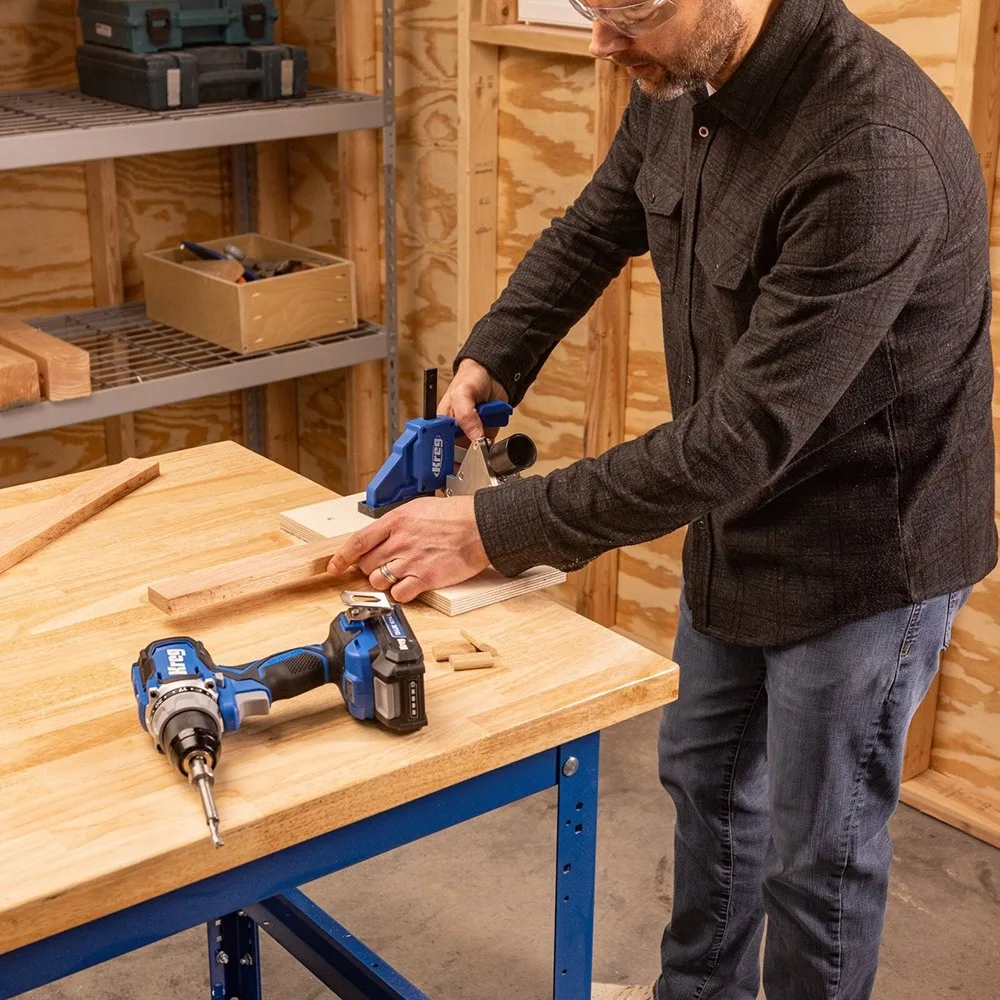

A cordless drill and battery pack on a workbench, with woodworking clamps nearby.
A sample sits on the table. The appearance, switch, and kit all look fine, and the supplier asks whether production can be scheduled. Do not nod yet. Write the sample approval record clearly: which fields must be filled in, and which version the next batch will follow. This article covers only sample approval record fields, sign-off and retention, change re-confirmation, and trial-production, first-article, and batch checks. It does not cover internal repair, does not make specific certification determinations, and does not replace a destination-market compliance advisor.
First turn “the sample looks good” into a checkable baseline
A factory being able to make one sample, and being able to keep producing to the same standard, are two different questions. Sampling capability answers only the first. Quality procedures, material consistency, and change control decide the second. The pressure in a retail private-label project is more concrete: appearance must stay consistent across the entire sales cycle, components must be traceable, and every later batch must reproduce the performance and feel of the initial sample.
The sample approval form turns verbal acceptance into an executable baseline. Before mass production, freeze at least five document types: technical specifications, BOM, Golden Sample, packaging and label artwork, and test and acceptance records. Each document should state a version number, date, approver, and applicable model. File documents by market, model, component, version, and validity period; documents for a similar model cannot substitute for this project’s documents. If the documents do not cover the final configuration, pause or arrange supplementary testing and move production scheduling back.
Column 1: Record the model, platform, and key configuration
Start with the product and battery platform, then set out branding, kit, packaging, and acceptance requirements. In the product column, record at least the model and platform, voltage convention, motor, torque, chuck, battery interface, and target price position. If the record only says “18V impact driver,” a change of motor or interface leaves no visible difference in the record.

The body model and battery pack in one frame, making it easier to check the model and battery platform against the record.
For cordless tools, record both the battery model and charger model; matching voltage does not establish compatibility. Being listed in the same category also does not establish that the tool, battery, and charger are interchangeable; verify the final combination against the project’s model list and specification documents.
The battery platform also needs to be locked to a specific cell model and BMS solution. If the record only says “18V platform” or “use customer battery,” there is no way to tell whether a changed cell or protection board is still the same configuration.
Column 2: Write one version each for branding, kit, and packaging
In the branding column, write the housing color, logo position, rating label content, and product naming. “Use customer brand” is too loose; a supplier could change the rating-label layout and still call it compliant.
In the kit column, list the battery, charger, bits, auxiliary handle, tool case, and spare parts item by item, with quantities and models. In the packaging column, write the manual language, labels, barcode, inner packaging, and master carton requirements. The sample baseline record should also include housing color, logo files, label content, manual language, barcode placement, and pack-out.
The tool body, battery, charger, tool case, manual, and master carton should communicate one consistent market identity. Before changing packaging material or battery, compare these items once to confirm the complete kit still matches.
Column 3: Who signs, how records are retained, and where test conditions are written
The Golden Sample, specification sheet, and sample acceptance records should be signed together and retained with version numbers, photos, BOM, packaging artwork, and test records. Mass production must not begin before the buyer’s written approval.
Keep the approved sample baseline, specification revision, packaging artwork, and kit list with the order. For the next order, compare against these items one by one instead of judging “close enough” from memory.
For sample testing, record startup, speed settings, switch, safety mechanisms, chuck or interface, abnormal noise, vibration, and temperature rise in the target use scenario. Install and remove the battery multiple times to check locking, contact, charging, and tool operation consistency, and record the conditions of each test. Conditions should be written as traceable load and cycle tables; a “test passed” line on the last page of a report cannot support mass-production acceptance.
Bringing the fields from the first three columns into one table produces the summary page of the sample approval record:
| Record column | At minimum record | Retention format |
|---|---|---|
| Product and platform | Model, voltage convention, motor, torque, chuck, battery interface, target price position | Specification version page, rating-label photo |
| Battery and charger | Battery model, charger model, cell model, BMS solution | BOM, battery pack label, compatibility check table |
| Branding and kit | Housing color, logo position, rating label content, product naming; kit models and quantities item by item | Sample approval photos, kit packing list |
| Packaging and manual | Manual language, labels, barcode, inner packaging, master carton | Packaging artwork, barcode placement drawing |
| Testing and sign-off | Test conditions, results, signatory, date | Load and cycle tables, acceptance records |
Column 4: Which changes must stop and be re-confirmed
Once a sample changes, update the approved record first, then discuss production. After sample approval, any change involving cells, PCB, motor, charger, plastic parts, molds, firmware, or key processes must be notified in writing and resubmitted for sampling or testing as agreed.

Close-up of a disassembled cordless drill and motor assembly, useful for comparing the motor and other key components against the change list.
Cell, PCB, motor, charger, firmware, and BMS changes are controlled changes; no substitute materials may be used in production without the buyer’s written approval. Changes to the housing, electronics, battery interface, or tooling require a separate technical and commercial review and cannot be treated as an ordinary color or packaging change.
Use the table below to sort change triggers first:
| Change type | First action | Until completed |
|---|---|---|
| Cells, BMS, charger | Update battery BOM, check that certificate models correspond to the actual cells and battery pack | Do not schedule production or substitute materials |
| Motor, PCB, firmware, key process | Notify in writing and resubmit for sampling or testing as agreed | Do not enter mass production |
| Housing, battery interface, tooling | Conduct a separate technical and commercial review; confirm sample, packaging, and cost | Do not treat as a color or packaging change |
| Packaging, manual, barcode | Update packaging artwork and sample approval photos; check language, labels, and barcode placement | Do not print and go live directly |
The key point in checking battery certification documents is that the document chain closes: certificate model numbers map one-to-one to the actual cells and battery pack, test reports come from verifiable laboratories, and test summaries can be produced on demand. If the cell or battery pack changes, confirm with the laboratory or supplier whether transport, safety, or whole-tool testing must be repeated; an old report cannot cover a new configuration.
Connect the sample approval form to trial production, first article, and batch checks
After the sample approval record is signed, two more comparisons remain: trial production and first article. The sample line and the mass-production line should follow the same set of quality procedures; do not look only at a demonstration on the sample line.
Decide whether to arrange third-party retesting according to project risk; if arranged, randomly select at least 5 units from the trial batch and send them to a third-party laboratory for testing under the same load and cycle conditions. At the same time, take BMS boards, cells, gearboxes, and motors and check whether lot numbers match the confirmed supply sources.
The mass-production contract should list four document sets as attachments: the sample test report (if third-party retesting was arranged, attach the retest report as well), trial-production sampling and failure records, rectification feedback and mass-production SOP clauses, and the sample baseline parameter table.
Mass-production inspection clauses must state the exact standard version, inspection level, sampling plan, sample size, defect definitions, functional test items, and rejection rules. If the contract leaves only “inspect per AQL,” the two sides will not match specific decisions at the acceptance site.
Compare the first article and batch against the same sample approval form, item by item, in this order:
- Check model, battery and charger models, kit quantities;
- Check housing color, logo, rating label, manual language, barcode placement;
- Check the previously recorded startup, speed setting, switch, safety mechanism, interface, noise, vibration, and temperature-rise results;
- Check packaging artwork, pack-out, master carton quantity, and lot number;
- Check change records and written approval.
During trial production, record failed items, rework causes, and corrective actions, and confirm before mass production that these issues have been closed. Third-party organizations can also carry out production conformity assessment and certification for products and production processes, but the service scope, cost, and whether they cover power tools and the target market must be confirmed separately.
Send the form first, then discuss production scheduling
If you are preparing an OEM sample approval, first list the model, battery platform, kit contents, packaging language, target market, and quantity, and ask the supplier to fill in the same form. This information is used to confirm the configuration and quotation basis; it does not equal placing an order. After the record is signed, compare the next order against it first; if cells, motor, packaging material, or key processes change, confirm in writing before production.