
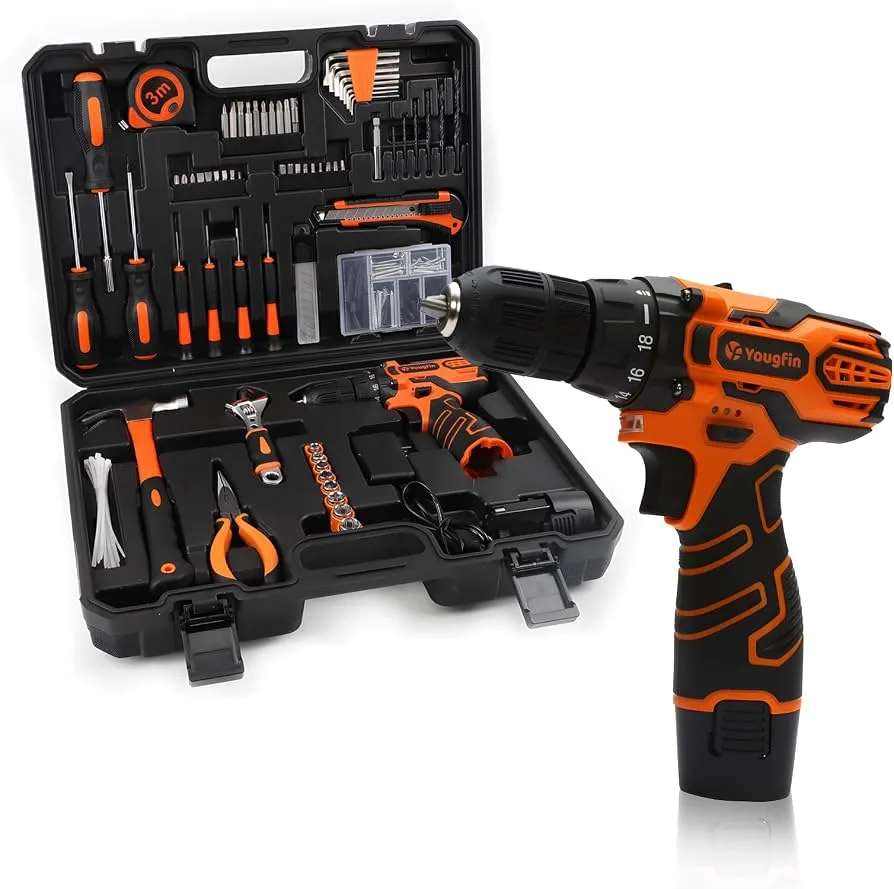

A cordless tool, battery pack and charger as the three objects a buyer verifies before quoting.
A quotation arrives for a kit described as "18V, includes batteries and charger." The first instinct is to confirm the voltage, note it matches the rest of the range, and move on to price. Matching voltage does not establish compatibility, and the first step is to record the exact tool, battery-pack and charger model codes and put the combination in writing.
Scope: this covers only the external, document-level verification a buyer can run before quoting a kit configuration. It does not cover internal pack or charger repair, does not substitute for a licensed electrician's assessment, and is not a recommendation of any specific model. Three objects are verified throughout: the exact model codes, the written compatibility matrix, and the interface and protection details behind it.
A battery platform is a product system, not a voltage label
A battery platform is a defined system, not just a voltage number. Voltage describes one electrical characteristic; compatibility also depends on the physical interface, terminals, communication and protection design. Two batteries labelled the same voltage can still be incompatible.
Why might two "18V" batteries still be incompatible? The interface geometry, terminal layout, communication protocol and protection design can all differ while the label stays the same. Being listed in the same category also does not establish that the tool, battery, and charger are interchangeable; verify the final combination against the project's model list and specification documents.
A voltage figure also tells you nothing about how long a pack will run under a given load. Runtime depends on load, capacity, tool efficiency and usage pattern, and is settled separately from fit. Keep the two questions apart when you read a quotation: will it fit, and how long will it work. Only the first one is settled by model codes.
Customers purchase a battery platform, not just a single tool. The value of a cordless power tool lies in the ecosystem of battery, charger, and tool, so a distributor is committing a channel to one system, not buying one SKU. Battery platform compatibility is the biggest long-term risk.
What the platform actually covers in a quotation
A quotation that says only "18V" has not specified a platform. Before price discussion, the document must fix the voltage class (12V, 18V, 20V or another) together with battery capacity in Ah and the cell type behind it.
Choose the battery architecture, capacity, charger and kit combination to match product positioning and local market requirements. On the FORZMAX platform, the supplier describes 5S as a compact platform with flexible capacities for lighter cordless tools, and 10S as a higher-output platform for demanding tool categories; these are the supplier's own platform descriptions, not a cross-brand interchangeability statement. The catalogue lists cordless options as multiple capacities and 5S / 10S pack configurations, with complete kits as tool, battery, charger, case and accessory combinations.
Each line item needs its own code. The OEM scope splits into three layers:
| Layer | What it fixes |
|---|---|
| PRODUCT | Model and platform: voltage, motor, torque, chuck, battery interface and target price position |
| KIT | Batteries, charger, bits, auxiliary handle, tool case and spare parts |
| PACK | Manual and carton: language, labels, barcode, inner packaging and master carton requirements |
Read the three layers as a dependency chain. A change at PRODUCT level, such as a different motor or a different battery interface, propagates into KIT and PACK, which is why a quotation that only names a voltage leaves two of the three layers undefined. The battery platform also needs to be locked to a specific cell model and BMS solution. Note the gap: no available source gives BMS protection thresholds, communication protocols or charger output profiles, so electrical compatibility beyond "confirm in writing" cannot be detailed here.
Three steps to verify compatibility in writing
Confirm compatibility using the exact battery, charger and tool codes in writing.
- Obtain a written compatibility list. It should identify which tools accept which batteries, which chargers support them, and whether any generation or type restrictions apply.
- Identify the exact drill, battery-pack and charger models, then ask the supplier to confirm each combination. For cordless tools, identify both the battery and charger models; matching voltage does not establish compatibility.
- Verify the final combination against the project's model list and specification documents, not against category listings or product images.
Attribution matters when manufacturer statements enter the file. Several manufacturers publish platform guidance on their own sites: Makita separates its CXT, LXT and XGT lines in its published FAQ material, and Bosch's AMPShare documentation directs users back to the tool manual for battery and charger selection. Both examples are reported from FORZMAX's own voltage-label article; the underlying manufacturer documents were not fetched here and need direct verification before publication. A manufacturer's compatibility statement is scoped to that manufacturer's specified systems, and it does not imply that 18V batteries from different brands are interchangeable. When a manufacturer document enters your file, check it against the primary source and record which system it covers.
Mark unverified items with a verification-status column rather than deleting them or filling them in.
Battery platform RFQ checklist
Paste this into the RFQ. Each row carries a verification status: confirmed / pending supplier confirmation / not yet supplied. An empty cell is not zero and not agreement.

| Field | Value | Status |
|---|---|---|
| Exact tool model code | ______ | not yet supplied |
| Exact battery-pack model code | ______ | not yet supplied |
| Exact charger model code | ______ | not yet supplied |
| Written compatibility matrix (per combination) | ______ | pending supplier confirmation |
| Battery capacity (Ah) and quantity per kit | ______ | not yet supplied |
| Charger input voltage, plug type, supported battery codes | ______ | not yet supplied |
| Bare-tool and replacement battery options | ______ | pending supplier confirmation |
| Case, accessories and packaging contents | ______ | not yet supplied |
| Technical and transport documents for exact product and destination market | ______ | pending supplier confirmation |
| Warranty evidence and after-sales method | ______ | not yet supplied |
| Future tools planned for the same platform | ______ | not yet supplied |
The document row above is the one most often left blank. Rechargeable batteries ship under product and transport documentation rules that vary by order and destination, so the RFQ must name which reports and files apply to each exact battery code and shipment configuration. Packaging cannot be approved until that row shows the documents received.
Battery, cell and BMS questions to put to the supplier
Compatibility failures often originate in cell sourcing, assembly and pack testing rather than in the interface itself. Ask:
- Testing: what tests are performed on each PACK before shipment, such as capacity checks, internal resistance measurement, and charge/discharge cycles.
- Reports: confirm the supplier can provide test reports for sample batches.
- Assembly: ask about the assembly process, including cell matching, weld quality, and final testing.
- Process evidence: request videos of the assembly and testing process where possible.
- Scope: for cordless power tools, the checklist must specifically cover professional indicators including battery management system (BMS) safety, cell grade, charger compatibility, and motor durability.
Vague answers on cells and BMS should pause the order. If a supplier cannot state which cells go into the pack, how the BMS is configured, or what happens when a protection threshold is crossed, hold the RFQ until written answers arrive. The supplier guide this article draws on also states that battery failure is a leading cause of cordless tool recalls; that is the guide's own claim, not an independently verified statistic, and it should be checked before it is repeated. If a supplier has an independent battery pack assembly line, it usually indicates stronger technical capability, but you should further verify their testing capabilities and cell sourcing.
Lock the record before production
Agree a sample reference and a written specification. If a sample changes, update the approved record before production.
If the record only says "18V impact driver," a change of motor or interface leaves no visible difference in the record. Record exact codes instead. Photograph the body model and battery pack in one frame, making it easier to check the model and battery platform against the record.

Tool body and battery pack recorded together in a single frame.
Set the inspection scope with the order: which functions and measurements to check, how to document results, and how a deviation will be handled. This sits inside the four-gate flow: 01 select the platform, 02 confirm the sample, 03 follow production, 04 release the shipment.
Common wrong answers, corrected
"Same voltage, so it fits." Voltage does not establish interface, terminal, communication or protection compatibility. The exact codes and a written matrix are what settle this one.
"It's in the same product category, so the set is interchangeable." Category listing is not a compatibility matrix. Per-combination confirmation against the model list is what closes the gap.
"The photo shows batteries, so the kit includes them." The quoted KIT line items (tool, battery, charger, case, accessories) define what ships; a marketing image does not override them. Check the KIT line items against the include list before quoting.
"We'll sort compatibility after the sample arrives." A sample proves appearance and basic configuration, not mass-production consistency. The frozen specification and the change-control rule have to exist before the sample ships.
Before you request a quotation
Compatibility is confirmed by written model codes and a compatibility matrix, never by a voltage label or a category listing. Send the compatibility matrix you already hold, or the exact tool, battery and charger codes you need confirmed, and the review can start from the record.
Any cover image is an illustrative schematic, not proof of actual products, hole patterns, dimensions or performance.