
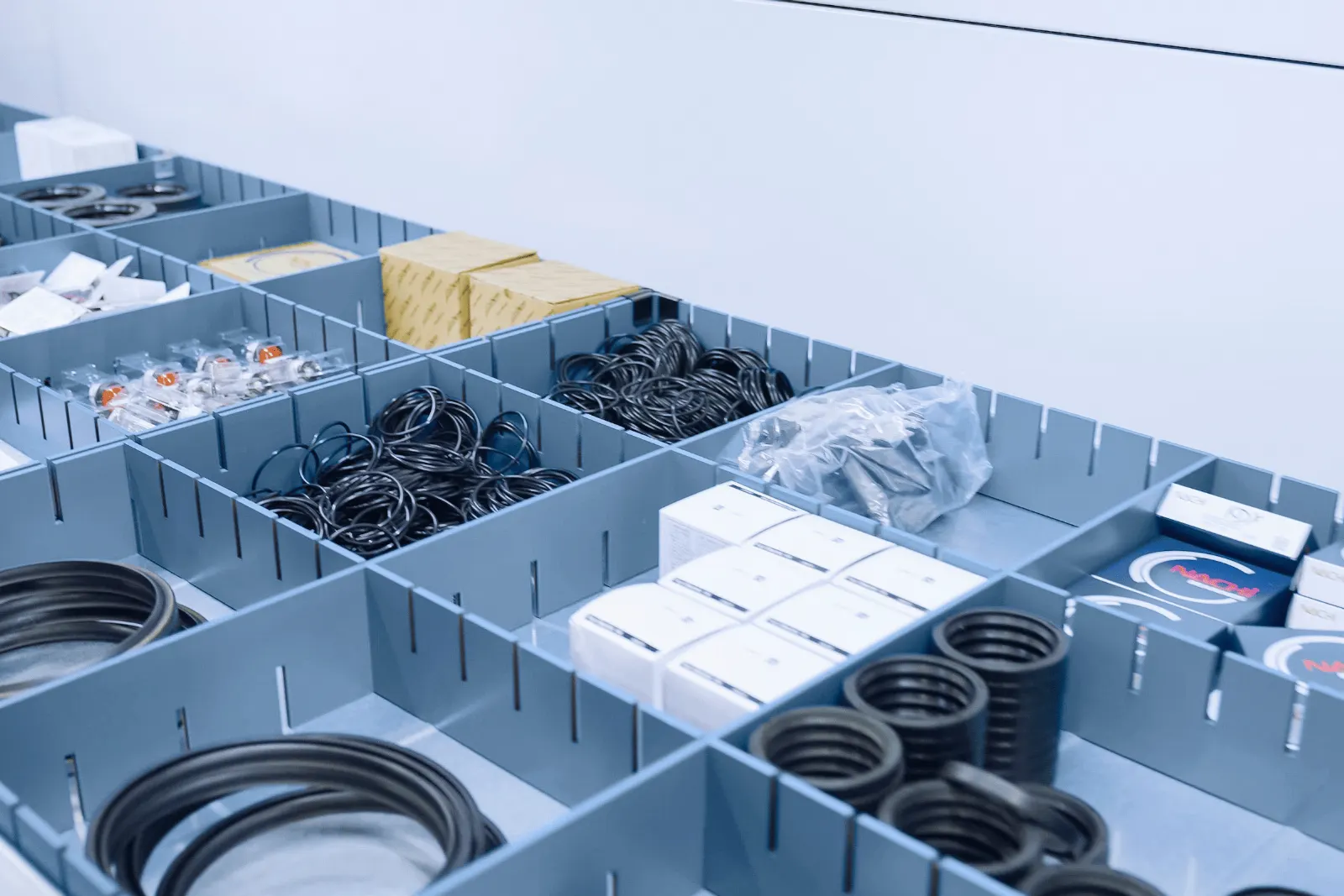
Before a bulk power-tool order, obtain an orderable spare-parts list for each exact model and revision, then agree prices, minimum quantities, replenishment times and change notices. A box of free spares in the first shipment is useful only if the distributor can identify and reorder the same approved parts later. Start with the service plan, not a percentage added to the container quantity.
Identify the tool revision before the part
Record the tool nameplate reference, your sales SKU, manufacturing batch or serial range where relevant, the exploded drawing revision and the supplier’s orderable part code. A position number on a drawing may only locate a component; confirm the ordering code separately. Similar housings or the same marketing model name do not establish interchangeability.
For example, a switch may change between two revisions of the same tool. Keep the old and new service references linked to the applicable batches instead of replacing every old inventory record with the latest number. Dimensions and photographs help identify a part, but electrical ratings, interfaces and manufacturer approval still matter.
Bosch’s official spare-parts service uses tool identification and exploded views to find parts. That is a useful example of a traceable lookup, not evidence that another supplier uses Bosch numbering. Ask your own supplier to demonstrate a lookup from one delivered tool to an orderable replacement.
Separate consumables, service parts and complete assemblies
Abrasive discs and drill bits are working accessories; a switch or bearing is a repair part; a complete battery or charger can be a separately orderable assembly. Keep those demand streams separate. A consumable sold repeatedly with every working tool does not have the same demand pattern as a component replaced only after a diagnosed fault.
Carbon brushes belong on a list only for a motor that uses them. A brushless motor has no carbon brushes to replace, as Makita’s technical explanation confirms. For an electronic controller, motor or guard, ask which approved assembly is supplied and who is permitted to fit and test it. A parts list is not permission for customers to carry out electrical repairs or bypass a safety device.
How much initial stock is enough?
Use the installed tool base, actual service history where available, replenishment lead time and the consequences of a stockout. For a new model without history, treat the first quantity as a forecast and review it after sales begin. Record which assumptions came from comparable products and which are still uncertain.
A simple planning calculation is expected demand during replenishment plus a chosen safety allowance. If forecast demand is two units a week, replenishment takes six weeks and you choose four extra units, the example reorder point is 16 units. Those inputs are hypothetical, not a FORZMAX failure rate or recommended stock level. Compare the point with usable stock plus confirmed incoming stock minus committed demand; adjust for actual variability and purchasing multiples.
Expensive, rarely used assemblies may be better covered by confirmed supplier stock or a repair arrangement, while inexpensive parts with demonstrated frequent demand may justify local stock. Safety-critical parts still need approved specifications regardless of demand. Do not count quarantined returns as usable stock or reuse suspect battery components to meet a shortage.
Get a parts quotation, not just a tool quotation
Request the terms in the table for each critical part. Include quote expiry, packaging quantities, freight basis and the notice process for substitutions or discontinuation. Tool production lead time is not evidence of spare-part dispatch time. There is no universal 30-day, 45-day or five-year commitment that can be assumed for your order.
Ask whether a supply commitment means stock held for you, made-to-order production or best-effort sourcing. Agree how long support is intended to continue after the last tool purchase and how a last-time buy will be handled. A negotiated price-protection period and a promise of availability are separate terms; one does not establish the other.
| Question | Where to record |
|---|---|
| Which parts can the factory supply for this exact model? | Parts list, per model |
| What is the minimum order quantity for each part? | Parts list, per part |
| Are parts stocked, and how fast do they ship? | Availability field |
| What is the confirmed lead time for each critical part? | Lead-time field |
| Is there a price-protection period on critical wear parts? | Clause reference |
| Which written document carries the answer? | Quotation or PO number |
Check the first replenishment before a customer needs it
As an administrative trial, ask the supplier to quote a small set of the approved references and reconcile the response with the drawing, revision and packing unit. Confirm whether a stated minimum means individual pieces, pairs or complete repair kits. If an order code changes, obtain the supersession note and applicable model range before updating the inventory record.
Store the approved list, drawing, quotations and change approvals with the order file. Record actual dispatch and receipt dates after replenishment; a signed promise does not prove future stock or delivery performance. For a FORZMAX inquiry, provide exact tool models, expected installed quantities, destination and your service arrangement. Request the parts schedule alongside the tool quotation.