
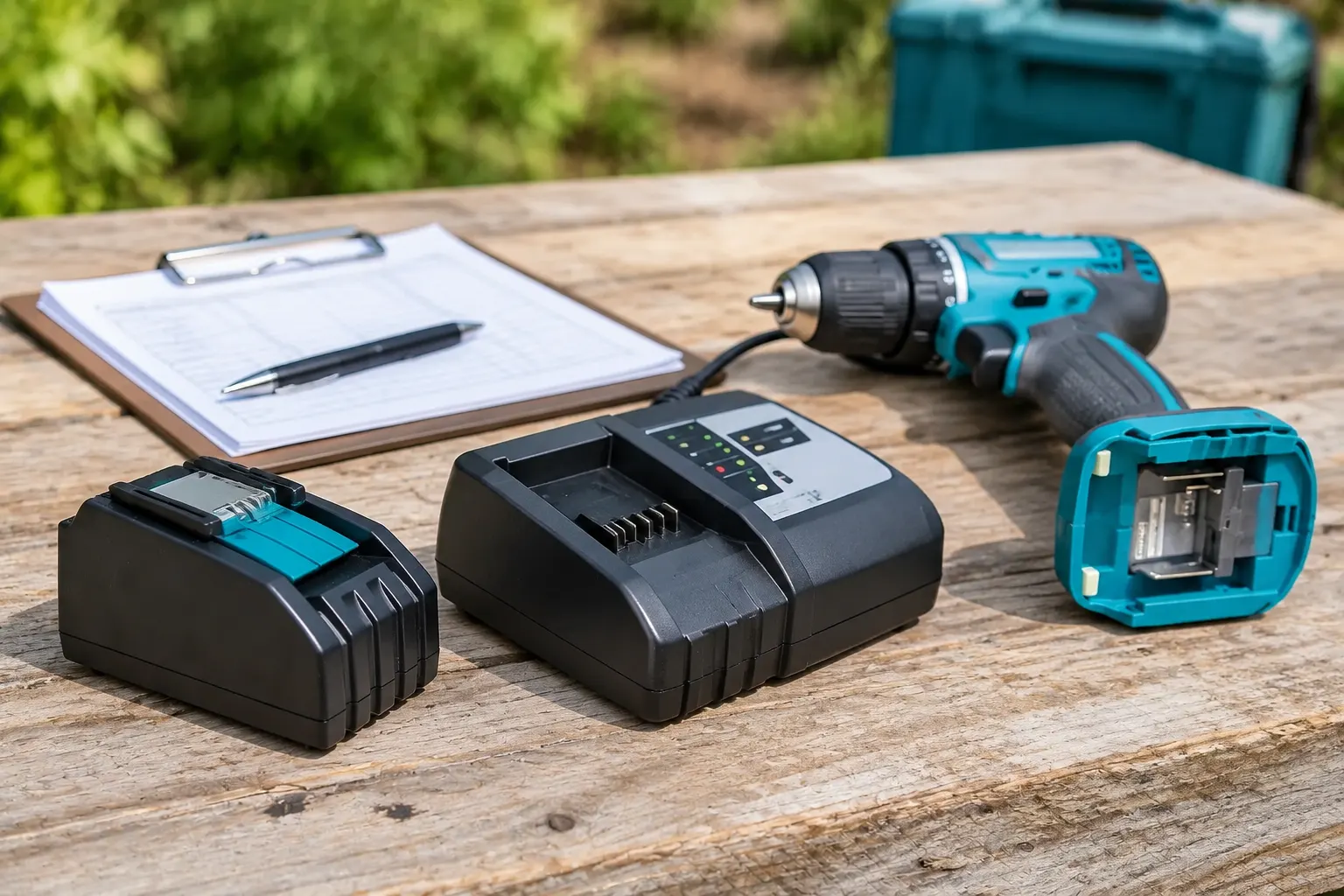
Before ordering a cordless kit, get separate written warranty terms for the tool, battery and charger. For each, identify the covered model, period and start event, exclusions, remedy and responsibility for labour and freight. The periods may be identical or different; “warranty included” does not tell a distributor enough to price or administer after-sales support.
Keep the supplier’s B2B warranty agreement separate from the promise you make to the end customer. Applicable statutory rights may also exist and are not replaced by this checklist. Have a qualified local adviser check the terms for the destination and sales channel before using them in customer-facing documents.
Build a Component-by-Component Coverage Map
| Warranty field | What the supplier should state |
|---|---|
| Covered item and model | Tool body, battery pack, charger and accessory model codes |
| Warranty period | Period for each covered item, stated separately |
| Start-date trigger | Factory exit, shipment, arrival, end-user sale or another event |
| Covered failures | Defect types and failure conditions included |
| Exclusions | Wear, abuse, modification, unauthorized repair, non-genuine parts and other stated limits |
| Labour and freight | Whether labour, diagnosis and transport sit inside or outside coverage |
| Claim route | Who submits the claim and through which channel |
| Evidence required | Photos, serial number, purchase record, fault description, test data |
| Remedy | Repair, replacement, credit or return |
| Response milestones | Acknowledgement, assessment and disposition times |
| Spare-parts lead time | Availability and delivery method for replacement parts |
Keep a dated copy of the agreed policy and order schedule. Preserve relevant emails and messages as well; their legal effect depends on the circumstances. Resolve conflicting wording before ordering instead of assuming the latest webpage or an informal number defines the agreement.
Purchase evidence and registration: what must the customer provide?
Ask which purchase records the policy accepts, whose name must appear and how the purchase date is established. An invoice, order record or payment statement may contain different information; do not promise that any one document will always qualify. Where a receipt is missing, obtain the supplier’s agreed alternative procedure.
Registration is a separate step. Record whether it is required, the deadline and who performs it. Also confirm whether the distributor can submit claims for customers and whether the seller or territory must be authorized. Collect only the customer information needed for the claim and handle it under your applicable privacy obligations.
Open the claim before returning the product
Record the order reference, purchase evidence, exact tool/battery/charger models, available serial or batch codes, symptoms, failure date and relevant photographs. A serial number helps identify a unit but is not, by itself, proof of authenticity or warranty eligibility. Ask the service team what else it needs before requesting more tests from the customer.
RMA means return merchandise authorization. Treat it as permission to follow a specified return process, not automatic approval of replacement or credit. Obtain written handling instructions and confirm transport costs before shipping. Do not ask a customer to open a battery or charger, bypass protection or keep operating damaged equipment. Suspect lithium batteries require the carrier’s applicable transport procedure, not ordinary parcel assumptions.
Attach Every Warranty Term to the Approved Configuration
Version control keeps that record usable. Decide which warranty documents carry a revision (the coverage map, the approved warranty wording and the claim-file template) and how the purchase order records the revision that ships with the order. A claim is then checked against the revision on the order, not against the newest file on someone's desk.
Link the shipped tool, battery and charger codes to the approved sample and order revision. When a component changes, keep the supplier’s written change approval and confirm any effect on coverage. This lets the service team identify the covered configuration without asking the customer to inspect internal parts.
What official brand policies can teach you
Brand policies illustrate why component and market details matter. The linked Makita U.S. policy groups lithium-ion tools, batteries and chargers in a limited-warranty category; Metabo HPT lists batteries and chargers in different duration categories. Read the full current regional policy and model exceptions. Neither policy establishes FORZMAX terms or a universal OEM warranty period.
Test the agreement with one hypothetical claim
Suppose a kit is shipped in January, sold by the distributor in April and reported faulty in June. Which event starts the warranty, and which document records it? If only the charger fails, must the entire kit travel back, who authorizes that return, and who pays each freight leg? A short worked case can expose a gap that a headline period misses. These dates are an example, not a coverage promise.
Before release, assign an owner to unresolved coverage, start-date, claim-route and freight questions. Agree how the supplier reports assessment progress and whether the resolution is repair, replacement or credit. For a FORZMAX quotation, send the destination, quantities and exact kit configuration with your component warranty schedule. Request the proposed written policy alongside the price.