
An “18-inch” or “20-inch” label is not enough to select a replacement chainsaw chain. Confirm pitch, drive-link gauge and drive-link count, then check the chain family and the bar-and-sprocket combination permitted for the saw. Distributors should keep that information in their parts records, rather than discover a mismatch after the customer opens the package.
A customer’s photograph may help identify the general shape of a saw, but its guide bar may already have been replaced, even when the machine model is known. Obtain the full saw model, bar markings and original chain identification before recommending a replacement. If those records conflict, put the recommendation on hold.
Bar length is only an initial filter
Grouping every “18-inch chain” into one stock specification makes searching easy but removes information that determines fit. A bar’s nominal cutting length is also different from its overall length. Measuring a detached bar from end to end can therefore produce a different figure.
Oregon explains that chain length is identified by drive-link count and that bars from different manufacturers may require different counts. Do not assume two bars with the same nominal length take the same chain. See Oregon’s chain identification guide.
When a customer asks for an 18-inch chain, ask for the complete saw model, a clear photograph of the markings near the bar mount, and the full number on the old chain or its packaging. These provide a record that can be checked instead of an estimate from appearance. Keep the original photographs: messaging-app compression can leave important numbers unreadable.
Keep pitch and gauge in separate fields
Pitch describes the chain’s dimensional spacing. Oregon defines it as the distance between the centres of the first and third of three consecutive rivets, divided by two. Chain pitch must match the drive sprocket and, where fitted, the bar-nose sprocket. Measurement can assist identification, but it does not replace the manufacturer’s fitment information.
Gauge means the thickness of the drive link that enters the bar groove, not the height of the depth gauge ahead of a cutter. A parts database should call this field “drive-link thickness / bar-groove gauge”, storing the value and unit separately. “Chain thickness” alone can be ambiguous.
Retain the chain-family designation too. Oregon lists 3/8-inch Low Profile separately from standard 3/8-inch chain. Do not strip “Low Profile” or “LP” during data cleanup and merge stock simply because the pitch looks identical. See Oregon’s matching guide.
For example, an enquiry saying “3/8, 1.3 mm” identifies a gauge but still omits the chain family and drive-link count. It is enough to find candidates, not to mark an order line as a confirmed fit.
Count drive links, not cutters
Drive links are the components on the inside of the loop that enter the bar groove and transmit drive. The sharpened cutters on the outside are different components. A customer’s “tooth count” may mean cutters or all visible links; establish what was counted before using the number.
If the markings cannot be read and the old chain is needed for a cross-check, stop the saw and isolate its power as instructed in the machine manual. Someone familiar with saw chain can mark one drive link as the starting point, count around the closed loop and check the result again. Use gloves suitable for handling sharp chain. Do not run the saw to identify its specification or treat the measured thickness of a worn chain as its original nominal gauge.
Do not calculate drive-link count from cutter count or fill missing fields with a supposedly common combination. The old chain could already be wrong, or the bar could have changed. Cross-check the count against the current bar markings, complete part identification and model-specific fitment data. If uncertainty remains, ask a servicing dealer to identify the attachment rather than ship a guessed size.
Matching three numbers does not confirm the whole assembly
Pitch, gauge and drive-link count eliminate many unsuitable parts, but they do not establish that every dimensionally similar chain suits the saw. Check the chain family, cutter design, low-kickback features and approved cutting-attachment combinations in the information for the actual model. Equal dimensions do not mean equal operating characteristics or safety limits.
If the bar is also being replaced, extend the record to its mounting specification and complete part number. Do not assume every bar accepting the same chain will mount on the saw. For a machine with a modified cutting attachment, obtain its current component details and arrange professional inspection where necessary. Do not recommend changing just one component without confirming the sprocket and bar.
Keep “original equipment”, “manufacturer-listed replacement” and “candidate awaiting confirmation” separate in your catalogue. Candidate model lists should not become blanket compatibility promises on a product page. Record the source and version of substitution information, and reconfirm it when changing the supplying brand rather than copying an old listing.
A new chain that will not fit is not automatically defective
Husqvarna identifies incorrect specifications and a worn or damaged bar as possible causes. An oversized drive-link gauge may not enter the groove; an undersized one may fit loosely. An old chain and bar can wear together, so the old chain seeming to fit does not prove a fault with the new chain. See Husqvarna’s troubleshooting explanation.
Separate reports of “does not fit” into specific symptoms: links will not enter the groove, loop length is unsuitable, or normal adjustment is not possible after assembly. Collect the package number, bar markings and photographs of the problem area. Check dispatch records against the customer’s current attachment before assigning blame. Never ask customers to force the chain, grind drive links thinner or shorten the loop by removing rivets themselves.
If specifications are confirmed but binding, bar damage or repeated derailment remains, stop using the saw and have a qualified technician inspect it. This article addresses identification and spare-part matching; it does not replace model-specific installation, tensioning, lubrication or operating instructions.
Put fitment information into the parts order
A usable record identifies the saw, bar, chain family, pitch, drive-link gauge and drive-link count. Add the full part number, marking photographs, the basis for confirming fit and the date checked. Keep bar length as a search field, but never let it alone determine dispatch.
Label incomplete enquiries “awaiting confirmation” and state which field is missing. Once resolved, attach the confirmation to the order and retain the record of the customer’s current cutting attachment. Sales and warehouse staff then need not reconstruct the specification from an old chat screenshot. If the customer later changes the bar, the record also explains why the previous selection may no longer apply.
To discuss chainsaw and garden-tool configurations, send your sourcing requirements to FORZMAX with photographs of the saw model, bar and chain identification, your target market and expected quantity. Availability and compatibility of particular spare parts require confirmation from the actual information supplied.
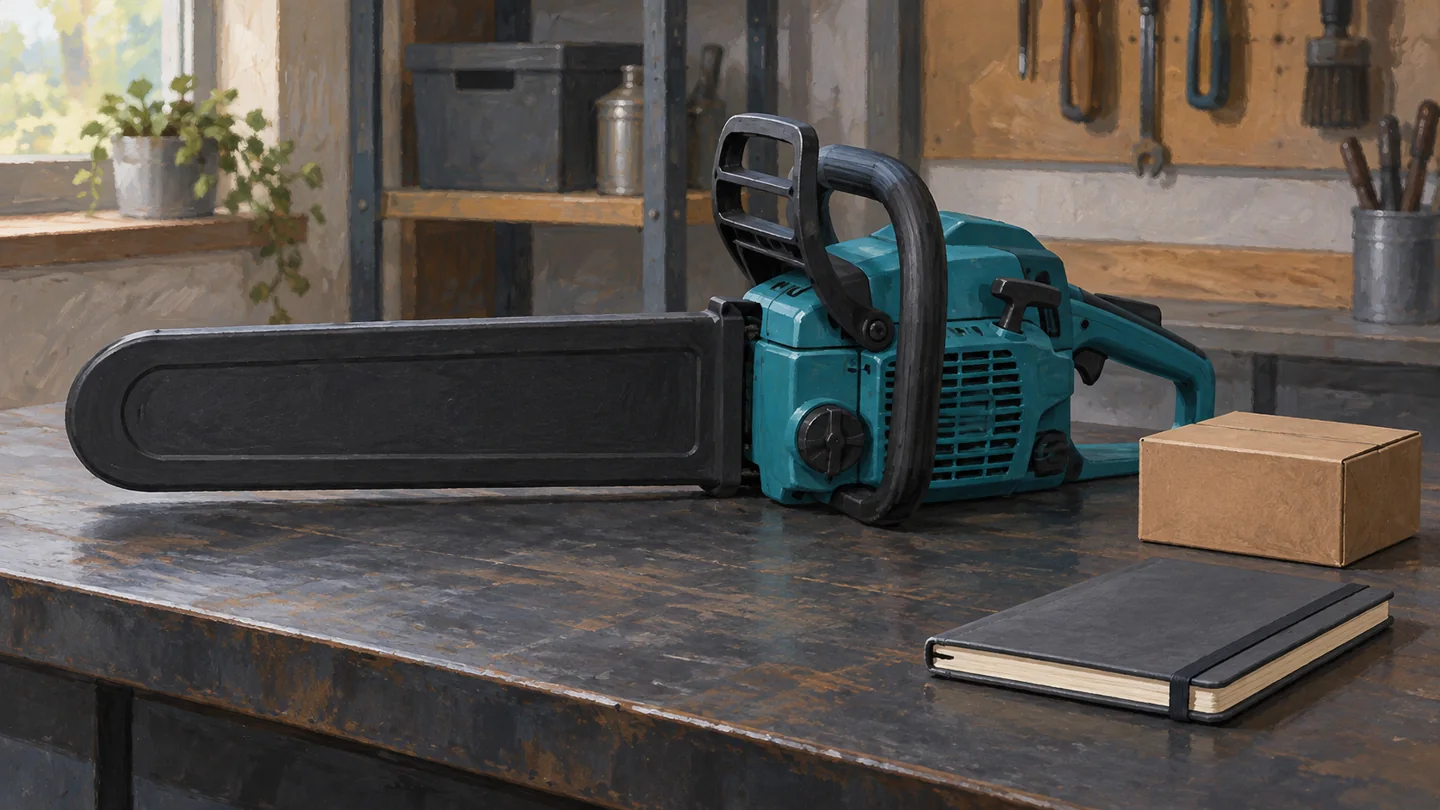
The cover is an AI-generated conceptual illustration, not a photograph of an actual model, a dimensional reference or a compatibility test.