
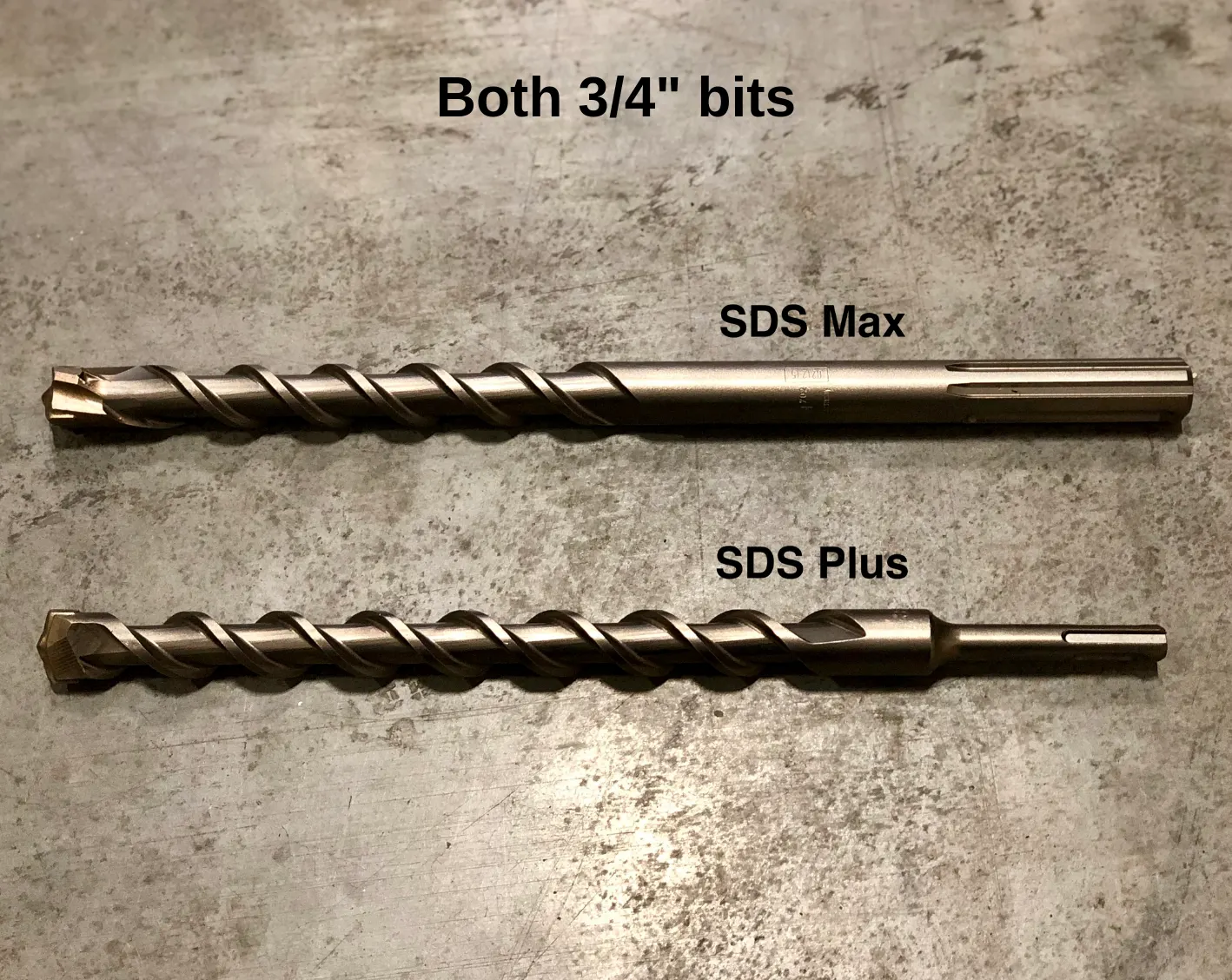
SDS Plus and SDS Max use different accessory connections: the nominal shank diameter is 10 mm for SDS Plus and 18 mm for SDS Max. They do not fit each other's holders directly. For a distributor, the first stocking decision is which hammer models customers use; the next is which hole diameters and working lengths those machines need.
SDS Max machines generally serve heavier drilling and demolition work, while SDS Plus covers lighter and medium-duty applications. Those categories do not specify a machine's impact energy or maximum hole size. Choose the exact hammer for the work, then match its accessories.
What changes between the two connections?
| Check | SDS Plus | SDS Max |
|---|---|---|
| Nominal shank diameter | 10 mm | 18 mm |
| Direct fit | SDS Plus holder | SDS Max holder |
| Machine capacity | Read the exact model's specification and permitted accessory range; the connection name alone is insufficient. | |
| Hole diameter | Specified separately from the shank diameter. | |
Bosch's SDS Max guidance describes the different shank sizes and direct-fit limitation. A supplier photograph can help identify the family, but the machine manual and accessory designation should settle the order. Do not force a mismatched shank into a holder or modify it to make it fit.
Record the full machine model rather than just the brand or battery platform. A range can include different holder systems. Also, “combihammer” describes combined functions; it does not establish that the machine takes both shank families. For example, Hilti identifies its TE 50-22 as SDS Max (TE-Y).
The shank size is not the hole size
The shank is the end held by the machine. The cutting head determines the nominal hole diameter. A 6 mm cutting diameter therefore does not mean a 6 mm SDS shank. This distinction matters when two accessory listings show the same hole size but different connections.
Keep four fields separate in the order: shank family, cutting diameter, working length and overall length. Working length is the usable drilling reach stated by the accessory maker; overall length includes the shank. Confirm the supplier's dimension labels rather than assuming every three-number product title uses the same order.
For an anchor installation, use the hole diameter and depth required by the anchor manufacturer's instructions. A physically compatible bit can still be unsuitable for the specified fixing. Material and reinforcement conditions also matter: a masonry bit is not automatically approved for drilling through reinforcement, and structural reinforcement must not be cut without the required project authorization.
Does an SDS Max to SDS Plus adapter solve the problem?
An adapter can provide a specific connection where both the machine and adapter instructions allow it. It does not make the two systems directly interchangeable or increase the accessory's capacity.
Milwaukee's 48-03-3025 adapter is a documented example: its machine-side shank is SDS Max and its accessory side is SDS Plus. That direction is important. It is not evidence that the reverse combination, or every hammer using an SDS Max holder, is approved.
Before offering an adapter in a kit, check the exact machine, adapter and accessory, including permitted operating modes and size limits. Keep that approval with the kit specification. If the combination is not documented, sell the matching accessory family instead of promising that an adapter will resolve the mismatch.
A demolition hammer that does not rotate cannot become a rotary drill merely because an adapter accepts a drill bit. Ask whether the tool supports rotary hammer drilling, chiselling, or both. For a chisel, verify the holder and the permitted chiselling mode separately.
Build the range around customer jobs
Start with the machines already used by the intended customers and the holes they actually need. There is no universal split of SDS Plus and SDS Max stock that works for every distributor. A catalogue's available sizes describe its range, not local demand.
As a planning example, a contractor may need the same nominal hole diameter for crews using different holder systems. Those are two distinct accessory lines even though the diameter is identical. Combining them under one vague “SDS bit” SKU can create incorrect picks and returns. Separate the family clearly in the product name, stock record and pack label.
Choose working lengths for required drilling depths and access. A long bit should have an identified use rather than being added to every kit automatically. Check the machine's recommended drilling range as well as its maximum capacity: a published maximum does not show which setup is suitable for repeated work at a particular depth.
Head construction, dust-extraction arrangements and material suitability can create further variants. Add them where the job requires them. Avoid creating a full matrix of every possible size before confirming which combinations customers can use.
A quotation record that prevents picking errors
| Item | Record | Use |
|---|---|---|
| Machine | Full model, holder family, operating modes and manual reference | Establish connection and permitted use |
| Accessory | Supplier part number, shank family, cutting diameter, working and overall lengths | Identify the exact stock item |
| Job | Material, required hole depth and fixing specification where applicable | Check that a fitting accessory also suits the task |
| Adapter, if included | Exact model, connection direction and documented limits | Keep a conditional configuration distinct from direct fit |
| Approval | Sample/reference, accepted specification and outstanding questions | Make repeat orders traceable |
The table is a blank purchasing aid, not a FORZMAX test result. Attach the relevant manual or specification to unresolved fields. A supplier's written response can clarify what it is quoting, but it should not override the equipment manufacturer's restrictions.
At sample approval, check both component identity and kit quantity. Ten accessories of the wrong family do not satisfy an order for ten matching bits. Link the approved kit to the sample approval record, and recheck it if the machine, holder or included accessory changes.
Keep compatibility checks separate from repair
Before inspecting or changing an accessory, disconnect the tool from power or remove its battery as instructed by the manufacturer. Follow the manual for cleaning, lubrication and checking retention. Do not run a tool with damaged parts or use it to test a doubtful connection. Holder damage, sticking or abnormal play should be assessed by qualified service personnel.
For range planning, compare the exact tools and supported accessories in our rotary and demolition hammer category. Send the machine model, intended material, hole sizes, required depths and quantities when requesting a kit quotation. Those details let the accessory list follow the job without relying on appearance or the general word “SDS”.