
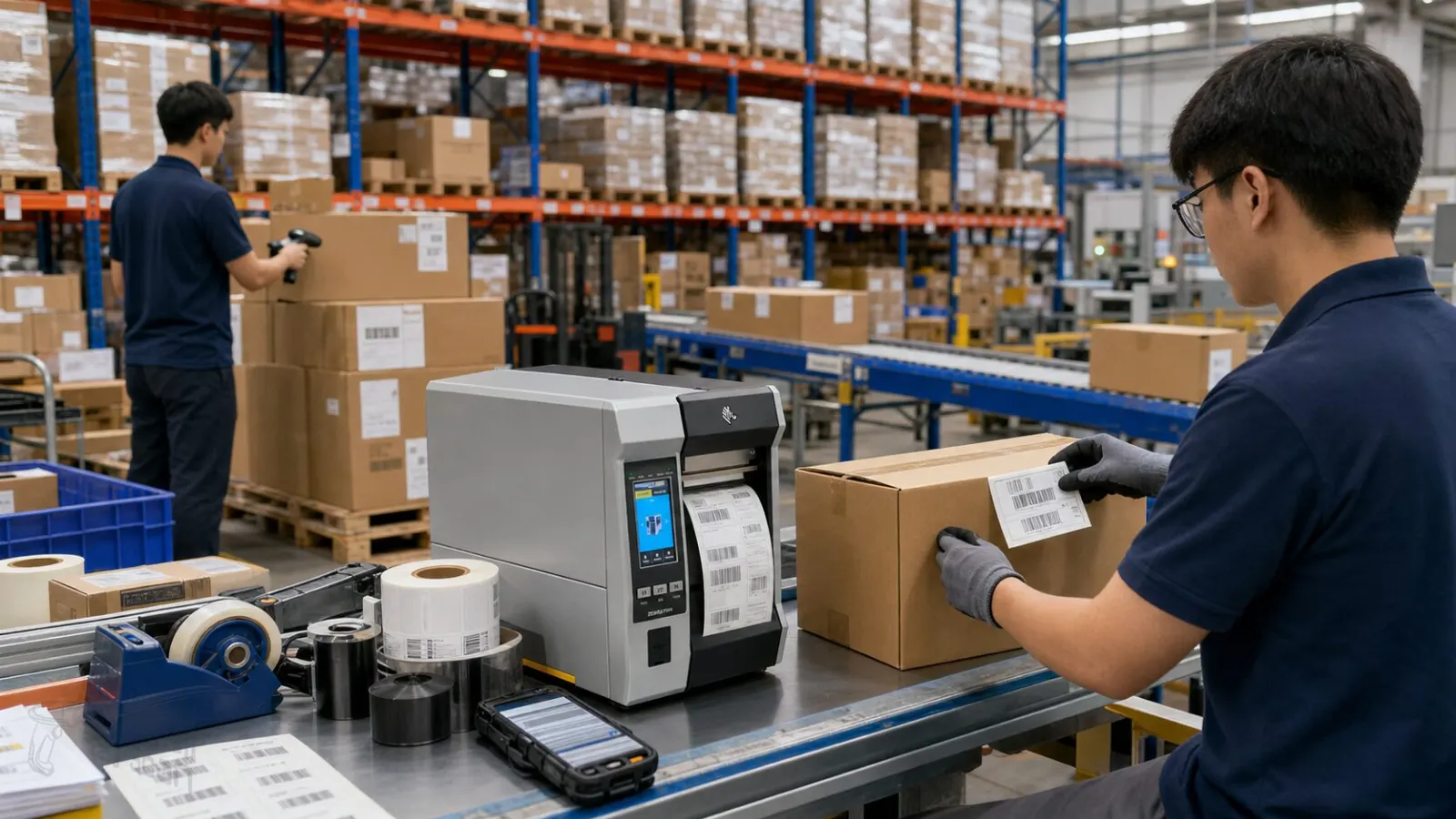
Record the serial from the tool itself and link it to the model, incoming carton and purchase order. Record the same unit against the outbound order when it leaves the warehouse. With both links, a service team can trace a returned tool to the shipment that brought it in. A scan of the carton alone cannot do that unless the supplier has supplied a reliable list of the units inside.
What to scan at receiving
Ask the supplier for a labelled photo and a sample data export for each model. Keep stock-keeping unit (SKU), lot and serial in separate fields: the SKU identifies the stock item, the lot identifies a batch, and the serial identifies a unit within the identifier's stated scope. Preserve leading zeros and significant separators. A kit barcode can identify the kit sold at retail without identifying the drill or battery inside it. In the GS1 system, a Global Trade Item Number (GTIN) plus a serial can identify an individual trade item; a logistics unit can have a separate Serial Shipping Container Code (SSCC).
At the dock, compare the item label with the supplier's carton-to-unit list before relying on that list. Record the supplier, model, unit serial or lot as applicable, receipt date, purchase order and carton ID. Flag duplicates within the supplier's defined scope and hold mismatches for review. If a battery has a lot but no serial, keep its lot and mark it as batch-tracked. Do not copy the tool serial into the battery field.
What changes when a kit is split?
Keep the original kit and carton associations, then record the new movements separately. For example, PO-104 brings in carton C-07 with a drill marked D-0127 and a battery marked lot B-08. If a service team takes the battery and the drill ships on order SO-306, the drill shipment stays linked to D-0127 and the battery transfer stays linked to B-08. The lot does not tell you which individual battery a customer received. These codes are illustrative, not manufacturer labels.
What to do with an unreadable label
Save a clear photo, the model and the receipt or return reference. Leave the serial unresolved and ask the supplier which evidence it accepts. Do not infer the serial from a similar carton or overwrite the old record when a replacement is issued. Link the old item to the replacement and keep the dates and reason. The trace record supports the claim; coverage and remedy depend on the applicable terms.
Try the process before a large delivery: pick one test serial, find its receipt and shipment, then work backward from the shipment to the carton. Investigate any broken link before relying on the register for claims or a stock hold.