
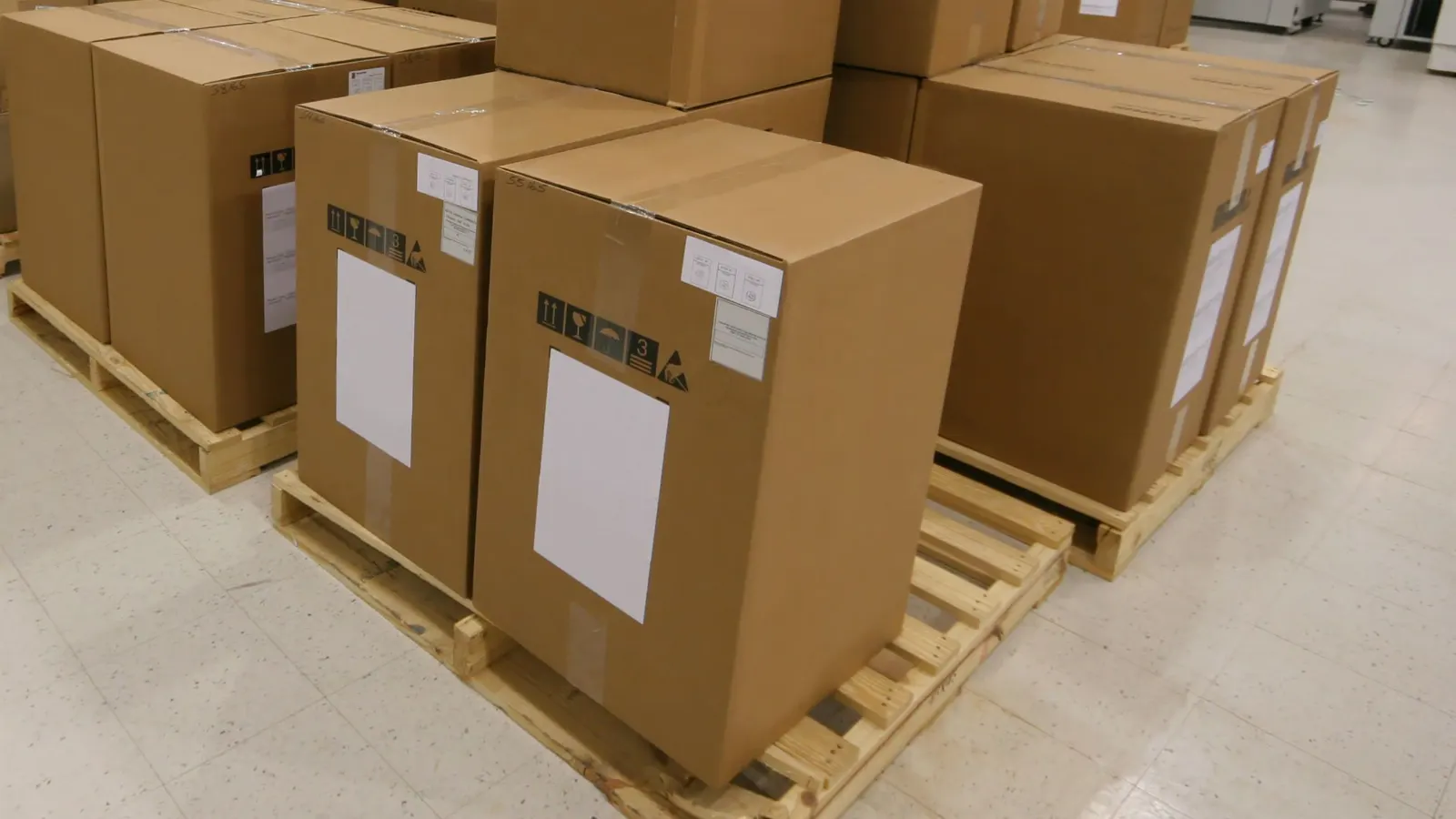
A master-carton drop test checks how a packed shipping carton and its contents respond to impact. For a power-tool shipment, a useful result identifies the exact kit and packaging tested, the test procedure, the damage found and the acceptance criteria agreed before testing. A photograph of an intact box or a note saying “passed” cannot establish all of that.
Start with the distribution route. A carton delivered individually by a parcel carrier faces a different handling pattern from cartons kept together on a pallet. Give the laboratory the packed weight, dimensions, kit configuration and customer requirements so it can select the appropriate procedure. There is no single drop height that qualifies every power-tool carton.
What does the test tell you?
It can help assess whether the carton, cushioning and arrangement protect a specified tool kit under the chosen conditions. Inspect both the packaging and its contents: a scuffed outer carton and a cracked tool housing have very different consequences. Conversely, an apparently undamaged box does not establish that its contents still function safely.
A drop test covers an impact condition. Do not describe a standalone drop exercise as completion of a wider distribution-testing programme that also requires other tests. Nor does the result certify the electrical safety of a charger or the transport compliance of a lithium battery. Those requirements need their own evidence.
Choose the procedure for the shipment
ASTM D5276 covers free-fall testing of loaded containers. Its published scope concerns the container and inner packaging's ability to withstand impact and protect the contents. Naming this method alone does not tell the buyer which test conditions or contractual acceptance criteria were used.
ISTA distinguishes integrity tests from distribution simulations. For example, 1A is an integrity test for individual packaged products up to 150 lb (68 kg); 3A addresses individual packaged products moving through parcel delivery, within its stated 70 kg (150 lb) limit. These are the publishers' stated limits, not a conversion table. Confirm the applicable procedure and edition with the laboratory rather than selecting a programme solely because the carton fits its weight limit.
For a buyer, the practical distinction is the question being answered. Comparing two cushioning designs during development is different from meeting a retailer's specified delivery programme. If a marketplace or customer names a protocol, obtain its exact designation and applicable packaging configuration. An Amazon-specific requirement, for instance, should not automatically become the specification for an unrelated wholesale shipment.
Which drop height and sequence should you use?
Use the selected procedure and the agreed customer specification. Ask the laboratory to record the heights, orientations, sequence, sample count and any conditioning. Packed mass and package type may affect those choices. A height copied from another order is not a defensible substitute.
The report should make deviations visible. If a development trial used an adapted sequence, describe it as that trial; do not label it a complete standard test. This lets the buyer compare like with like when reviewing a revised insert or carton.
Keep the test with a suitably equipped laboratory or qualified operator. Dropping a carton by hand introduces uncontrolled orientation and release conditions and presents handling risks. This article is a purchasing guide, not a substitute for the procedure or an operator's safety instructions.
Pack the sample exactly as the order will ship
For a cordless drill kit, identify the drill, battery, charger, accessories and case, then record how each is restrained inside the retail packaging and master carton. The arrangement matters alongside the outer carton: a loose heavy component can move even when the carton remains closed.
Use the intended carton material, inserts and closure. Record gross weight and dimensions, the number of kits, packaging revision and sample identifier. Photograph the arrangement before closing the box. If a substitute product is proposed, agree with the laboratory what it can represent and which conclusions it cannot support; a mass substitute cannot demonstrate the real tool's post-test function.
Send test samples to the laboratory protected against accidental damage and let the laboratory document their arrival condition. An already damaged sample creates uncertainty about which damage the prescribed test caused.

Agree what counts as a failure before testing
Set acceptance criteria with the buyer and laboratory, referring to the applicable product specification and testing programme. Separate product safety and function from cosmetic packaging requirements. Avoid deciding after the event that an inconvenient defect is acceptable.
| What to inspect | What the acceptance agreement should address |
|---|---|
| Tool and accessories | Housing damage, displaced parts, retained accessories and the specified safe functional checks. |
| Battery and charger | Damage observations and the qualified assessment required before any further use or test. |
| Internal packaging | Restraint, component movement and whether protection remains adequate for the agreed requirement. |
| Outer and retail cartons | Closure, containment, readable identification and agreed cosmetic limits. |
These are areas to define, not universal pass limits. A cosmetic crease may be acceptable for one distribution agreement and unacceptable for a retail presentation requirement. A damaged battery needs a safety response, not a cosmetic concession. Do not charge or operate a suspect battery or tool to see whether it “still works”; isolate it under the site's safety procedure and refer it to qualified personnel.
A practical acceptance-record example
The following is a blank example for a drill-kit shipment, not a FORZMAX test result or certification. Complete it with the laboratory's actual report and the buyer's approved specification.
| Record item | Entry to complete |
|---|---|
| Order and sample | Purchase order, kit model, sample ID and report number. |
| Tested configuration | Tool, battery and charger models; quantities; carton and insert revisions; pack-out photograph. |
| Distribution route | Parcel, pallet or mixed handling; applicable customer requirement. |
| Test plan | Procedure and edition; conditioning; heights and orientations; sample count; agreed deviations. |
| Acceptance basis | Approved product, function, containment and cosmetic criteria. |
| Observed result | Actual findings, photographs, test date and laboratory identification. |
| Release decision | Accepted, held for investigation or revised for retest; responsible approval and date. |
Suppose an insert is changed after the sample was tested. The old report identifies the previous arrangement; it does not automatically qualify the new one. Hold the packaging decision open while the buyer and laboratory assess whether the change needs further testing. Keep the revised drawing and any new result with the order rather than overwriting the old record.
Connect the result to production
Before shipment, compare the production pack-out with the configuration identified in the report. Check carton and insert revisions, component quantities, closure and identification. This is where a useful laboratory result can lose its relevance: the report may be sound while production uses a different package.
Use the approved sample record to link the packaging revision to the kit specification. For repeat orders, record changes to weight, component arrangement, cushioning, carton supplier or distribution route and obtain the appropriate review. Define retest triggers in the quality agreement rather than assuming every change requires the same response.
For a customised power-tool packaging project, send the kit configuration, destination, expected transport route and any buyer-specified testing programme. Agree the packaging and evidence needed before treating a test report as shipment approval.