
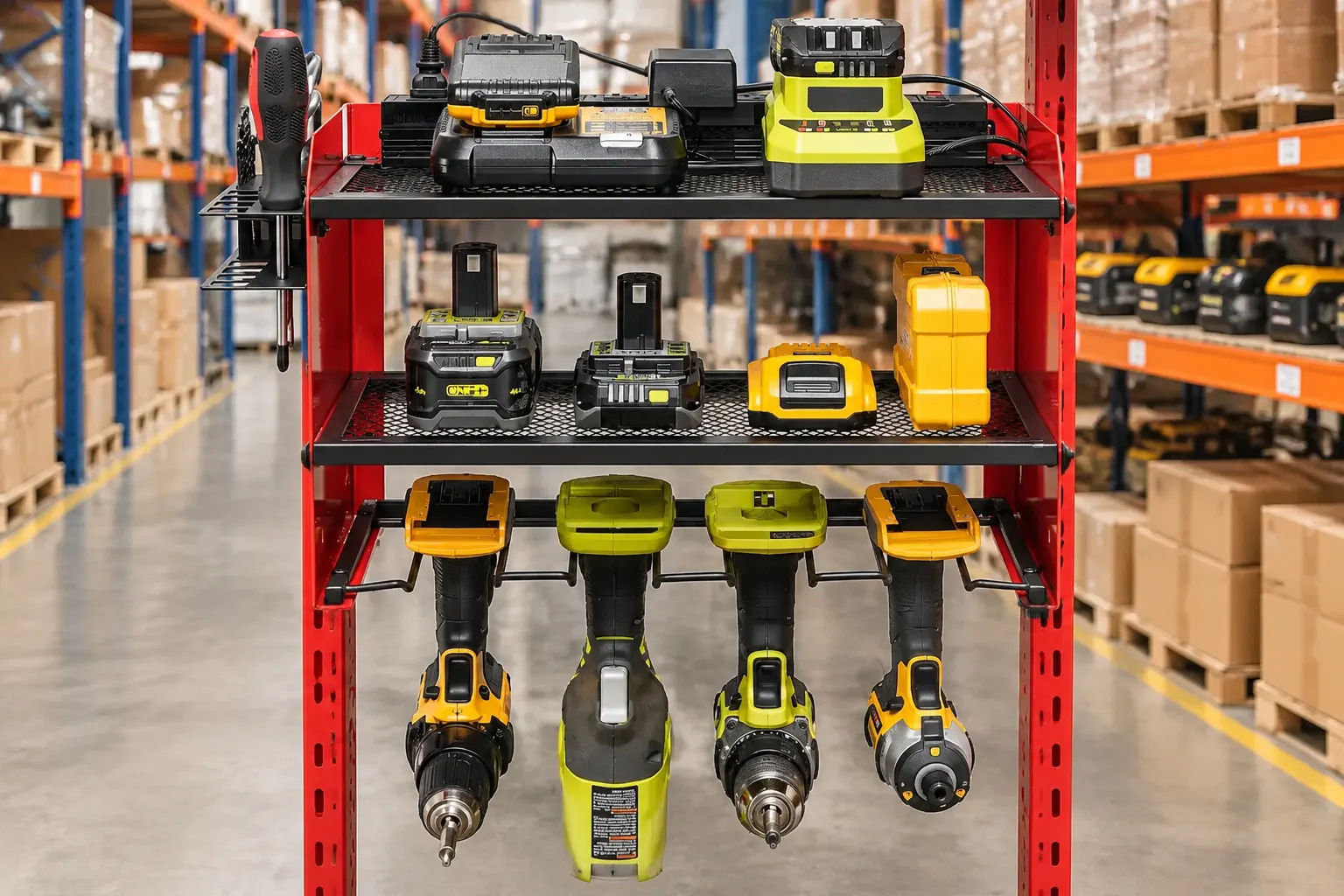
For lithium-ion power tool batteries, use the storage temperature listed in the instructions for the exact pack model. Do not substitute the limits for charging, operating the tool or transporting the pack. In a mixed warehouse, keep a record for each model and measure the locations where cartons actually sit, not just the temperature beside the office thermostat.
Set a stock rule for each pack model
Record the model and revision, the source of the storage limits, any different rules for long-term storage, and the maker’s instructions for state of charge (how full the battery is). Check whether the instructions refer to the pack alone or to a complete tool kit. Do not apply another brand’s charge percentage or temperature range. If the instructions are missing or unclear, ask the maker for written guidance before assigning the pack to a storage area.
The STIHL safety instructions for AP 200 S, AP 300 S and AP 500 S give separate conditions for storage and charging. Check the edition supplied with the pack you actually stock; those STIHL instructions do not set a rule for other models.
Measure the shelf, not the office
Start with likely hot spots: upper racks, shelves near a loading door or a wall exposed to the sun. Use a temperature logger with a known accuracy and review readings over a full shift and outside working hours. For example, a reading at the office can be in range while the rack above a loading bay exceeds a particular pack’s limit. Note the affected shelf, period, model and lot; a cooler reading later does not show how long the stock was exposed.
What should happen after an excursion?
Put affected stock on hold in the inventory system and give the supplier or safety lead the recorded temperatures and duration. Follow the maker’s assessment and your site procedure before returning the stock to sale. Do not charge a suspect pack to see whether it still works. For signs of heat, smoke or hissing, keep people away and activate the workplace emergency plan without touching or moving the pack. For a cool pack with swelling or case damage, get instructions from your safety lead before any handling. Record who decided the outcome and why; do not release stock merely because the carton looks undamaged.
Warehouse record template
| When | Fields to enter |
|---|---|
| Model setup | Pack model and lot; manual revision and link; storage range and charge state; charger requirements kept separately |
| Shelf reading | Location and time; measured temperature; applicable model limit; status and operator |
| Stock hold or release | Affected lots; time and duration; action, evidence and person who authorised the decision |